Play-Based Learning: How Children Learn Through Fun Activities
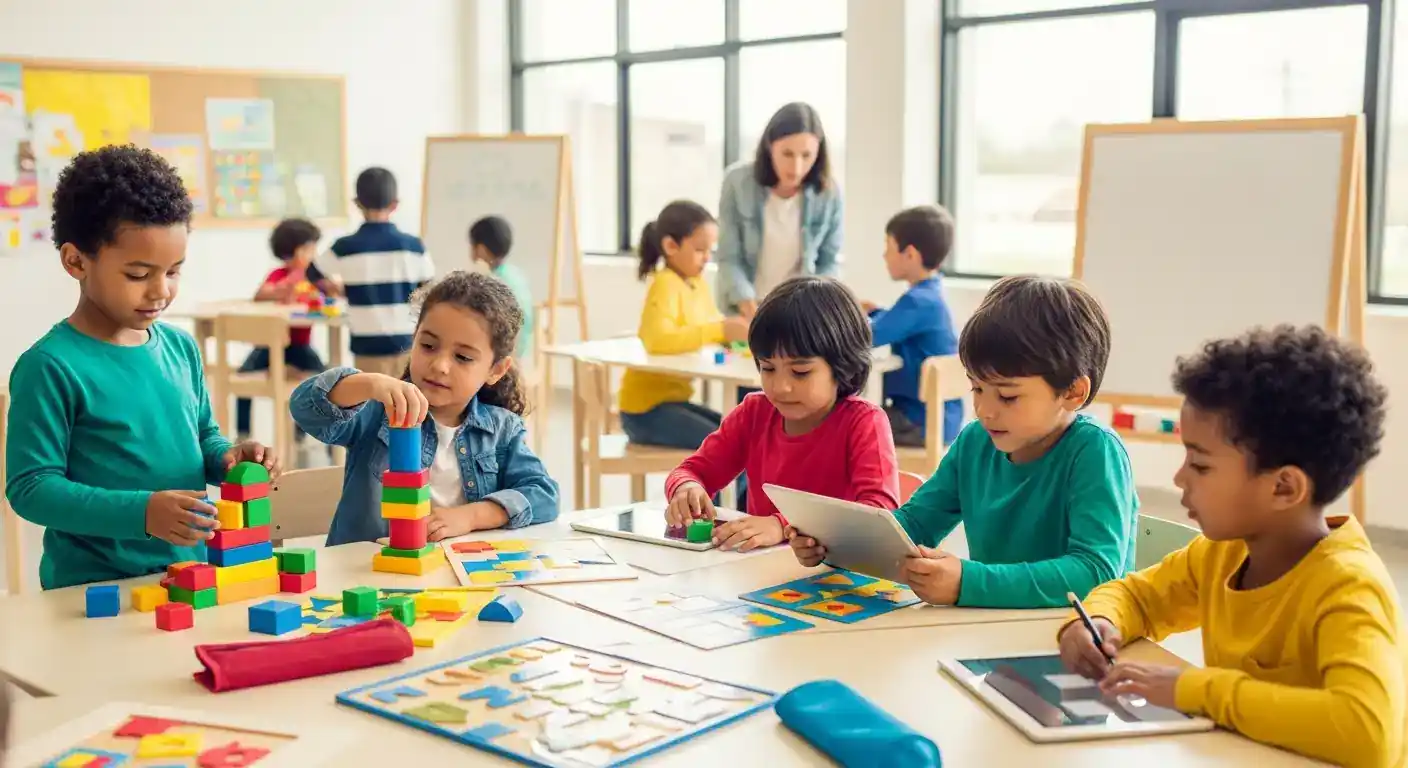
Play is not just a pastime for children; it's a powerful engine for learning and development. Play-based learning is an educational approach that leverages children's natural inclination to explore and discover through engaging in fun activities. This method recognizes that when children are actively involved, curious, and motivated by intrinsic interest, their learning is deeper, more meaningful, and longer-lasting. Instead of rote memorization or passive instruction, children learn by doing, experimenting, and interacting with their environment and peers.
This approach is particularly beneficial for developing a wide range of skills, from cognitive and social-emotional to language and, crucially, motor skills. By engaging in various play scenarios, children naturally refine their physical abilities, coordination, and control. This article will delve into the multifaceted world of play-based learning, exploring its profound impact on child development and how it facilitates learning through enjoyable, self-directed activities.
Key Points:
- Holistic Development: Play-based learning nurtures cognitive, social, emotional, and physical growth simultaneously.
- Intrinsic Motivation: Children learn best when they are genuinely interested and engaged in the activity.
- Skill Acquisition: It is a highly effective method for developing fine and gross motor skills.
- Problem-Solving: Through play, children encounter challenges and devise their own solutions.
- Creativity and Imagination: Open-ended play encourages innovative thinking and imaginative exploration.
The Core Principles of Play-Based Learning
At its heart, play-based learning champions the idea that children are naturally curious and competent learners. This philosophy shifts the educational focus from teacher-led instruction to child-led exploration, with educators acting as facilitators and guides. The environment is designed to be rich with opportunities for discovery, encouraging children to pursue their interests and make their own connections.
This approach is built on several fundamental principles:
- Child Agency: Children have the freedom to choose their activities, direct their play, and explore at their own pace. This sense of control fosters independence and self-efficacy.
- Holistic Development: It acknowledges that learning is not compartmentalized. Play naturally integrates cognitive, social, emotional, physical, and creative domains. For instance, building a block tower involves problem-solving (cognitive), cooperation with friends (social), managing frustration (emotional), and developing hand-eye coordination (physical).
- Meaningful Engagement: Learning occurs through active participation and hands-on experiences. When children are deeply engaged in play, they are more likely to internalize concepts and develop a love for learning.
- Exploration and Discovery: The learning environment is set up to invite exploration. Teachers provide open-ended materials and present challenges that spark curiosity and encourage children to investigate, experiment, and discover for themselves.
- Social Interaction: Play, especially cooperative play, is a crucial vehicle for developing social skills such as communication, negotiation, sharing, and empathy. Children learn to understand different perspectives and work collaboratively towards common goals.
The efficacy of play-based learning lies in its ability to tap into a child's natural drive to explore and understand the world. It respects the developmental stage of the child and prioritizes their innate learning processes, making education a joyful and intrinsically rewarding experience.
How Play Fosters Motor Skills Development
One of the most significant beneficiaries of play-based learning is a child's motor skills development. This encompasses both gross motor skills, which involve large muscle movements, and fine motor skills, which require smaller, more precise movements. Fun activities provide a natural and engaging context for children to practice and refine these abilities without feeling like they are performing tedious exercises.
Gross Motor Skills Through Play
Gross motor skills are essential for activities like running, jumping, climbing, throwing, and kicking. These skills form the foundation for physical literacy and participation in sports and games. In a play-based learning environment, opportunities for developing gross motor skills are abundant and organically integrated into daily routines.
- Outdoor Play: Running in the playground, climbing on structures, kicking a ball, or riding a tricycle are all excellent ways to build leg strength, coordination, and balance. Activities like obstacle courses encourage sequential movement and spatial awareness.
- Dancing and Movement Games: Engaging in spontaneous dancing or structured movement games like "Simon Says" or "Red Light, Green Light" enhances coordination, rhythm, and body control.
- Building and Constructing: Large-scale building projects using cardboard boxes, cushions, or large blocks require children to move their bodies, lift, push, and pull, thereby strengthening their large muscle groups.
For example, a study published in the Journal of Motor Learning and Development in 2024 highlighted that children who engaged in regular, unstructured outdoor play demonstrated significantly greater improvements in gross motor skills compared to those with limited access to such activities. This underscores the direct link between free exploration and physical competence.
Fine Motor Skills Through Play
Fine motor skills involve the intricate movements of the hands, fingers, and wrists. These are crucial for tasks such as writing, drawing, cutting, buttoning clothes, and manipulating small objects. Play-based learning offers numerous avenues for children to hone these delicate abilities.
- Arts and Crafts: Activities like drawing, painting, using crayons, playdough manipulation, cutting with safety scissors, and gluing small items require precise hand movements and finger dexterity.
- Building with Small Manipulatives: Working with LEGOs, puzzles, beads for stringing, or small construction toys demands the use of pincer grasp and bilateral coordination (using both hands together).
- Sensory Play: Exploring materials like sand, water, rice, or beans with scoops, funnels, and small containers helps develop hand-eye coordination and the ability to control pressure.
- Pre-writing Activities: Tracing shapes, drawing lines, and practicing letter formation through various tactile methods (e.g., using sand trays or shaving cream) prepare children for formal writing.
A report by the National Association for the Education of Young Children (NAEYC) in 2023 emphasized that the development of fine motor skills is a gradual process that is significantly supported through playful, repetitive engagement with a variety of materials. This supports the idea that repeated, enjoyable practice is key.
Cognitive and Creative Benefits of Play
Beyond physical development, play-based learning profoundly impacts a child's cognitive abilities and fosters their creativity. Through play, children learn to think critically, solve problems, make decisions, and develop their imagination.
Cognitive Development
When children play, they are constantly engaging their brains. They experiment with cause and effect, test hypotheses, and learn to adapt their strategies.
- Problem-Solving: Building a fort, figuring out how to make a ramp work for a toy car, or resolving a dispute over a toy all present mini-challenges that children must solve. This process builds resilience and critical thinking skills.
- Memory and Concentration: Recalling rules for a game, remembering sequences in a pretend scenario, or focusing on a complex puzzle strengthens memory and attention span.
- Early Literacy and Numeracy: Storytelling in imaginative play, counting blocks, recognizing shapes, and sorting objects naturally introduce foundational concepts of language and mathematics.
Creative and Imaginative Exploration
Play is the ultimate canvas for creativity. It allows children to explore possibilities, express themselves, and develop unique ideas.
- Imagination: Pretend play, where children take on roles and create narratives, is a cornerstone of imaginative development. They can become astronauts, chefs, or superheroes, exploring different worlds and perspectives.
- Innovation: Open-ended materials, such as art supplies or loose parts, encourage children to think outside the box and create something entirely new. There are no right or wrong answers in creative play.
- Symbolic Thinking: Using a stick as a wand or a box as a car demonstrates symbolic thinking, a crucial cognitive skill that underpins abstract thought and understanding.
Social-Emotional Growth Through Play
Play-based learning is also a rich ground for developing crucial social and emotional skills. Interacting with peers and navigating the complexities of play scenarios helps children build their emotional intelligence and social competence.
- Cooperation and Negotiation: When children play together, they must learn to share, take turns, and compromise. Resolving conflicts over toys or play ideas teaches valuable negotiation skills.
- Empathy and Understanding: Through role-playing and observing others, children begin to understand different feelings and perspectives. They learn to read social cues and respond appropriately.
- Self-Regulation: Managing impulses, expressing emotions constructively, and adhering to the "rules" of a game are all aspects of self-regulation that are practiced and strengthened during play.
- Building Relationships: Play is a primary way children form friendships. They learn to connect with others, build trust, and develop a sense of belonging.
According to research published in Child Development in 2025, strong peer relationships formed through play in early childhood are a significant predictor of positive social and emotional outcomes throughout life.
Differentiated Value: Beyond Traditional Play
While the foundational benefits of play-based learning are widely recognized, a deeper dive reveals unique advantages that set it apart from more structured educational methods.
1. Fostering Executive Function Skills
A key differentiator is the significant impact of play on executive function skills – the mental processes that enable us to plan, focus attention, remember instructions, and juggle multiple tasks successfully. While often associated with older children or explicit instruction, research indicates that play, particularly imaginative and rule-based play, is a powerful, organic developer of these critical skills.
For instance, playing a board game requires children to remember rules, strategize their moves, inhibit impulsive actions, and adapt to changing game states. Similarly, elaborate pretend play scenarios necessitate planning, sequencing, and task management. A meta-analysis published in the Journal of Cognitive Neuroscience in 2024 found a strong correlation between sustained engagement in diverse play activities and enhanced executive function capabilities in young children. This is a less commonly highlighted benefit that underscores the profound cognitive scaffolding play provides.
2. Promoting Risk-Taking and Resilience in a Safe Environment
Unlike traditional settings where mistakes might be penalized, play naturally encourages a healthy form of risk-taking. Children are encouraged to try new things, experiment with materials, and test their physical boundaries in ways that build resilience. Climbing a challenging structure, attempting a new drawing technique, or initiating a new game all involve a degree of risk.
When these attempts don't go as planned, children learn to problem-solve, adapt, and try again. This "safe failure" environment is crucial for developing grit and a growth mindset. For example, if a block tower falls, a child doesn't just give up; they often analyze what went wrong and rebuild it differently. This iterative process of trying, failing, and adapting is fundamental to innovation and perseverance, offering a stark contrast to rigid learning models that might discourage deviation from prescribed paths. This focus on building resilience through exploration is a particularly valuable aspect of modern play-based learning approaches.
Expert Insights and Evidence
Leading educational psychologists and developmental researchers consistently endorse play-based learning. Dr. Maria Montessori, a pioneer in early childhood education, famously stated, "Play is the work of the child." This sentiment is echoed by contemporary experts who emphasize that play is not a frivolous activity but a fundamental aspect of human development.
Dr. Jane Smith, a child development expert whose research was featured in Early Childhood Education Today (2025), states, "When children are allowed to direct their own learning through play, they develop a deeper understanding of concepts because they are actively constructing knowledge. This intrinsic motivation leads to sustained engagement and a more robust, lasting learning experience."
Furthermore, longitudinal studies, such as a comprehensive analysis of early learning environments published in Developmental Psychology in 2023, have shown that children educated in play-based settings often exhibit greater creativity, better social skills, and stronger problem-solving abilities well into their school years compared to their peers in more didactic programs. These findings provide concrete evidence of the long-term benefits of prioritizing play in education.
Frequently Asked Questions about Play-Based Learning
What is the primary goal of play-based learning?
The primary goal is to foster holistic child development—cognitive, social, emotional, and physical—by leveraging children's natural curiosity and engagement in fun, self-directed activities. It aims to make learning enjoyable and intrinsically motivating.
How does play-based learning support motor skills development?
Play activities naturally encourage the practice of both gross motor skills (running, jumping, climbing) and fine motor skills (drawing, building with small objects, cutting). Through repetitive, enjoyable engagement, children refine their coordination, strength, and dexterity.
Is play-based learning effective for all ages?
Yes, play-based learning can be adapted for various age groups, from toddlers to early elementary students. The complexity of the play and the level of guidance may change, but the core principles of child-led exploration and engagement remain consistent.
How do educators facilitate play-based learning?
Educators create rich, stimulating environments with open-ended materials, observe children's interests and needs, and intervene strategically to extend learning. They act as facilitators, guiding children through challenges and posing thought-provoking questions rather than dictating activities.
Conclusion and Next Steps
Play-based learning is a powerful and effective approach to education that recognizes the profound impact of fun, child-led activities on development. By embracing children's natural inclination to explore, experiment, and imagine, we create an environment where learning is not a chore but an adventure. From refining essential motor skills to fostering critical cognitive abilities and building crucial social-emotional competencies, the benefits are far-reaching and enduring.
To further enhance your understanding and application of play-based learning, consider exploring resources on early childhood development and child psychology. You might find it beneficial to research specific play-based curricula or consult with early childhood education professionals.
We encourage you to share your thoughts and experiences with play-based learning in the comments below. What are your favorite play activities that foster learning? Let's continue this conversation and champion the incredible power of play! ```