Play-Based Learning: Enhancing Cognitive Skills Through Fun Activities
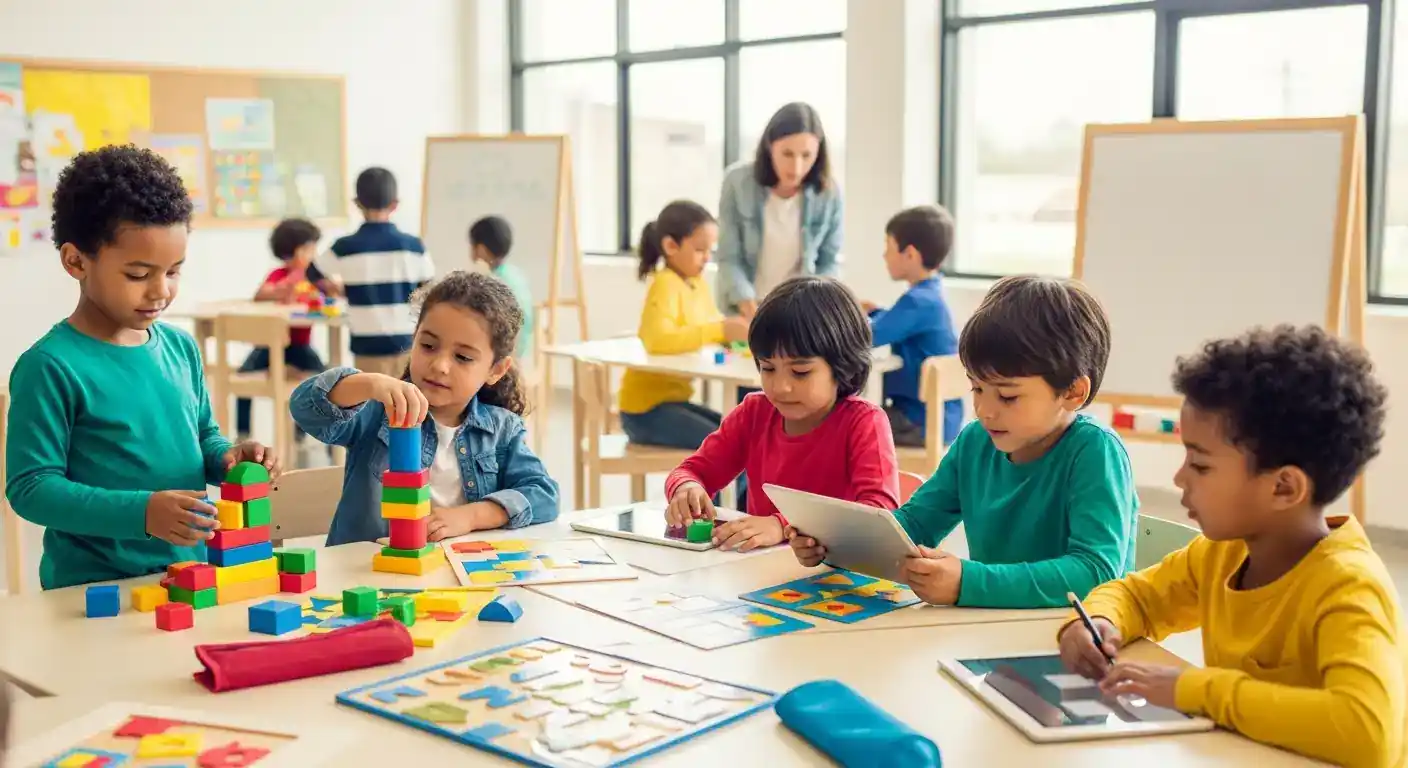
Play-Based Learning: Enhancing Cognitive Skills Through Fun Activities
Play is far more than just a pastime for children; it's a fundamental pathway to development, especially for their cognitive skills. Play-based learning harnesses children's natural curiosity and desire to explore, transforming everyday activities into powerful educational experiences. This approach recognizes that children learn best when they are actively engaged, experimenting, and having fun. By integrating play into educational frameworks, we provide a rich environment where young minds can flourish, building essential cognitive foundations that will serve them throughout their lives.
This article delves into the profound impact of play-based learning on cognitive development, exploring how various forms of play contribute to critical thinking, problem-solving, memory, and creativity. We'll uncover practical strategies for parents and educators to implement this dynamic approach, ensuring children not only learn but also enjoy the process. Understanding the science behind play-based learning empowers us to create more effective and joyful learning environments for the next generation.
Key Points:
- Cognitive Development: Play-based learning significantly boosts problem-solving, memory, and critical thinking.
- Engagement & Motivation: Children learn more effectively when actively engaged and having fun.
- Holistic Growth: Fosters not just cognitive but also social, emotional, and physical skills.
- Practical Strategies: Easy-to-implement activities for home and classroom settings.
- Future-Ready Skills: Develops adaptability and creativity essential for future success.
Understanding Play-Based Learning and Its Core Principles
Play-based learning is an educational approach centered on child-led and teacher-supported play. It's not simply unstructured free time, but a carefully designed environment where children explore, interact, and make sense of the world around them. This method contrasts with traditional didactic teaching by placing the child at the center of their learning journey, fostering intrinsic motivation and a deeper understanding of concepts. The core principles emphasize active participation, hands-on experiences, and learning through discovery.
One of the defining characteristics of this approach is its flexibility and responsiveness to children's interests. Educators observe children's play, identify their learning needs, and then gently guide them towards new discoveries. This guidance might involve introducing new materials, asking open-ended questions, or suggesting new ways to interact with an activity. The goal is to build upon a child's natural inclinations, making learning feel organic and exciting rather than prescriptive.
The Science Behind How Play-Based Learning Enhances Cognitive Skills
The link between play and cognitive development is well-established in neuroscience and developmental psychology. When children engage in play, their brains are actively forming new neural connections, especially in areas responsible for executive functions. These functions include working memory, inhibitory control, and cognitive flexibility – all crucial for academic success and life skills. Imaginative play, for instance, stimulates the prefrontal cortex, enhancing planning and abstract thinking.
Research indicates that play provides a low-stress environment for learning, which is optimal for brain development. Stress can impede learning by activating the amygdala and hindering the prefrontal cortex. In contrast, joyful play releases endorphins and dopamine, neurotransmitters that enhance memory and motivation. A study published in the Journal of Early Childhood Research in 2024 highlighted how structured play interventions significantly improved problem-solving abilities in preschoolers compared to traditional instruction. This evidence underscores the profound neurological benefits of integrating play into educational settings.
Diverse Types of Play and Their Cognitive Benefits
Different forms of play contribute uniquely to a child's cognitive development. Understanding these distinctions allows parents and educators to provide a rich and varied play diet. Each type of play offers specific opportunities for children to practice and refine various cognitive processes.
Symbolic and Imaginative Play
- Role-playing and pretend scenarios: Children develop abstract thinking as they represent objects or ideas with something else. They also practice perspective-taking, which is a key component of social cognition.
- Storytelling: Creating narratives enhances language skills, sequencing, and memory recall. This type of play also fosters creativity and the ability to think outside the box.
Constructive Play
- Building with blocks, LEGOs, or natural materials: This involves spatial reasoning, problem-solving, and fine motor skills. Children learn about balance, gravity, and structural integrity.
- Art and crafts: Activities like drawing, painting, and sculpting improve visual perception, pattern recognition, and the ability to translate ideas into tangible forms.
Games with Rules
- Board games and card games: These activities teach children about following instructions, turn-taking, and strategic thinking. They also develop working memory as children remember rules and previous moves.
- Sports and outdoor games: Beyond physical benefits, these games enhance decision-making under pressure, understanding cause and effect, and adapting to changing situations.
Exploratory and Sensory Play
- Sand and water play, sensory bins: Children learn about textures, weights, volumes, and properties of materials. This hands-on exploration stimulates curiosity and scientific inquiry.
- Nature exploration: Discovering the natural world encourages observation, classification, and understanding of ecological concepts. It also promotes a sense of wonder and connection to their environment.
Implementing Effective Play-Based Learning Strategies
Integrating play-based learning into daily routines doesn't require elaborate setups; it's about shifting perspective and providing the right opportunities. The key is to create an environment that invites exploration and discovery, rather than dictating specific outcomes.
Creating an Engaging Play Environment
- Offer open-ended materials: Provide items like blocks, loose parts, art supplies, and dress-up clothes that can be used in multiple ways. This encourages creative problem-solving and divergent thinking.
- Designate specific play zones: Create areas for different types of play, such as a quiet reading nook, a building zone, or a dramatic play corner. This helps children focus and engage deeply with activities.
- Rotate materials regularly: Keep the environment fresh and exciting by introducing new toys or materials periodically. This sparks renewed interest and new learning opportunities.
Guiding and Facilitating Play
- Observe and listen: Pay attention to children's interests and interactions during play. This provides insights into their current developmental stage and potential learning opportunities.
- Ask open-ended questions: Instead of telling children what to do, ask questions like "What do you think will happen if...?" or "How could we make this work?" This encourages critical thinking and independent problem-solving.
- Model curiosity and enthusiasm: Show genuine interest in their play and discoveries. Your engagement can inspire them to explore further and deepen their learning.
- Provide gentle scaffolding: Offer just enough support to help children overcome challenges without taking over the activity. This builds confidence and resilience.
Differentiated Value: The Role of Digital Play and Executive Function Training
Beyond traditional play, modern approaches to play-based learning are exploring the integration of digital tools and explicit executive function training. While screen time needs careful management, interactive educational apps and games can offer unique cognitive benefits. For instance, certain puzzle games or coding apps designed for children can significantly boost logical reasoning and sequential thinking. A recent study from the University of Helsinki (2023) demonstrated that well-designed digital play environments could enhance spatial awareness and problem-solving in children aged 4-6, provided they were balanced with offline activities. This suggests a nuanced approach to technology can further enhance cognitive skills.
Furthermore, a growing trend in early childhood education involves embedding executive function training directly into play scenarios. This isn't about drills, but about designing play that specifically targets working memory, cognitive flexibility, and inhibitory control. For example, a game where children have to remember a sequence of actions (working memory), switch roles quickly (cognitive flexibility), or resist the urge to peek during hide-and-seek (inhibitory control). This intentional design, as advocated by the Center on the Developing Child at Harvard University (2025), moves beyond incidental learning to a more targeted development of these crucial cognitive abilities within a playful context. For more information on this topic, readers can explore related articles on early childhood development strategies.
Frequently Asked Questions (FAQ)
What is the difference between free play and play-based learning?
Free play is entirely child-initiated and unstructured, driven purely by the child's interests with no adult intervention. Play-based learning, while still child-centered, involves intentional planning by adults to create an environment rich with learning opportunities and gentle guidance to extend and deepen the play experience towards specific developmental goals. Both are valuable, but play-based learning adds an educational framework.
How can I encourage play-based learning at home without expensive toys?
You don't need expensive toys! Focus on open-ended materials like cardboard boxes, blankets, natural items (leaves, sticks, stones), recycled containers, and art supplies. Encourage imaginative play with household items, build forts, or create stories together. The key is providing opportunities for creativity, exploration, and problem-solving with whatever you have available.
At what age is play-based learning most effective?
Play-based learning is highly effective throughout early childhood, typically from infancy through elementary school. While its methods adapt to different age groups, the core principle of learning through active engagement and exploration remains universally beneficial. It's particularly crucial during the preschool years (ages 3-5) when foundational cognitive and social skills are rapidly developing.
Does play-based learning prepare children for formal schooling?
Absolutely. Play-based learning develops crucial pre-academic skills such as problem-solving, critical thinking, language development, social-emotional regulation, and attention span. These are the underlying cognitive abilities that make formal learning easier and more effective. Children who engage in play-based learning often show greater curiosity, resilience, and a positive attitude towards learning, which are invaluable assets in school.
Conclusion: Embracing Play for Enhanced Cognitive Development
Play-based learning is a powerful and natural approach to fostering robust cognitive skills in children. By embracing play, we empower children to become active participants in their own learning, developing critical thinking, problem-solving abilities, memory, and creativity in joyful and meaningful ways. This method not only prepares them for academic success but also equips them with the adaptability and resilience needed to thrive in an ever-changing world. The evidence is clear: play is not just fun; it is fundamental to a child's cognitive growth.
We encourage parents, educators, and caregivers to integrate more play-based learning strategies into their daily interactions. Observe, facilitate, and celebrate the incredible learning that unfolds through play. Share your experiences and insights in the comments below, or subscribe to our newsletter for more tips on child development and learning strategies. For further exploration, consider delving into articles on fostering creativity in children or understanding emotional intelligence through play.