Making Math Fun: Everyday Activities to Teach Basic Concepts to Young Children
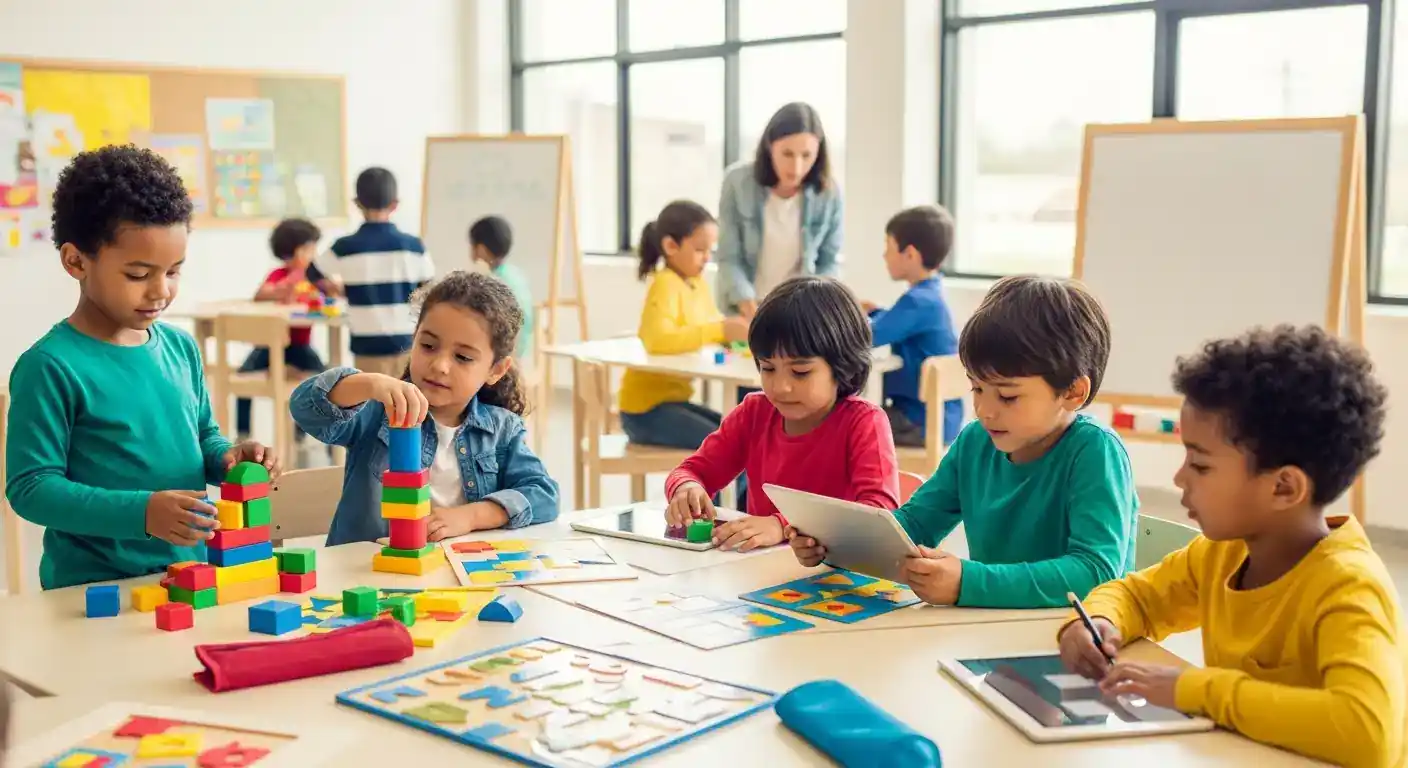
Making math fun for young children isn't just about worksheets and flashcards; it's about integrating numbers, shapes, and patterns into their daily lives through play and exploration. Early exposure to mathematical concepts builds a strong foundation for future academic success and fosters a lifelong positive attitude towards learning. This guide provides practical, engaging activities that transform everyday moments into powerful math lessons, helping your child develop essential skills naturally and joyfully.
Key Points:
- Play-Based Learning: Integrate math into games and daily routines.
- Hands-On Exploration: Encourage tactile experiences with numbers and shapes.
- Positive Reinforcement: Celebrate effort and discovery, not just correct answers.
- Everyday Opportunities: Utilize cooking, sorting, and walks for math lessons.
- Build Confidence: Foster a love for numbers from a young age.
Why Making Math Fun Matters for Young Minds
Introducing basic math concepts in an engaging way is crucial for a child's cognitive development. When children experience math as a natural and enjoyable part of their world, they develop a growth mindset towards learning. This early exposure to quantitative reasoning, problem-solving, and spatial awareness doesn't just prepare them for school; it equips them with critical thinking skills applicable across all areas of life.
Research consistently shows that early math skills are a strong predictor of later academic achievement, sometimes even more so than early literacy skills. By making math fun and accessible, we prevent the development of "math anxiety" and instead cultivate curiosity and confidence. Children who enjoy exploring mathematical ideas are more likely to persevere through challenges and embrace complex concepts as they grow.
Transforming Everyday Routines into Math Learning Opportunities
The world is a giant math classroom waiting to be discovered. By intentionally weaving math into daily routines and play, parents and educators can seamlessly teach basic math concepts without formal lessons. These "everyday math activities for young children" are often the most effective because they are relevant, hands-on, and highly engaging.
Counting and Number Sense: Building Foundational Skills
Counting is more than just reciting numbers; it's about understanding quantity and one-to-one correspondence. These activities help solidify number sense.
- Staircase Counting: Count steps aloud as you go up or down. "One, two, three steps!"
- Snack Time Subtraction: Give your child five crackers and ask, "If you eat one, how many are left?" Use fingers or objects to help visualize.
- Object Matching: Provide a set of small toys (e.g., cars). Ask your child to count them, then find the corresponding number of blocks or buttons. This reinforces the idea that numbers represent specific quantities.
- Number Rhymes and Songs: Songs like "One, Two, Buckle My Shoe" or "Five Little Ducks" are fantastic for memorization and developing a rhythm for counting.
- Counting Collections: During playtime, ask your child to count their cars, dolls, or building blocks. Emphasize touching each item as they count to practice one-to-one correspondence.
Shapes and Spatial Reasoning: Exploring the World Around Us
Understanding shapes and how objects fit together is fundamental to geometry and problem-solving. These activities bring shapes to life.
- Shape Hunt: Go on a "shape hunt" around the house or neighborhood. "Can you find something square? What about round?" This makes learning about shapes an active adventure.
- Building with Blocks: Encourage free building with blocks of various shapes. Talk about how pieces fit together and create structures. This naturally fosters spatial reasoning.
- Puzzle Play: Jigsaw puzzles are excellent for developing spatial awareness, problem-solving skills, and recognizing how different shapes form a whole.
- Drawing Shapes: Provide paper and crayons and encourage your child to draw circles, squares, triangles, and rectangles. You can even create simple shape collages.
Patterns and Sequencing: Recognizing Predictability
Recognizing and creating patterns helps children understand order, prediction, and algebraic thinking. Patterns are everywhere once you start looking.
- Object Patterns: Use everyday items like beads, blocks, or fruit to create simple patterns: red, blue, red, blue. Ask your child to continue the pattern or create their own.
- Clap and Tap Patterns: Create auditory patterns with claps and taps: clap, tap, clap, tap. Have your child mimic and extend the sequence.
- Clothing Patterns: Point out patterns on clothes, rugs, or wallpaper. "Look, your shirt has stripes: blue, white, blue, white."
- Story Sequencing: When reading a story, talk about the order of events. "What happened first? What happened next?" This builds foundational sequencing skills.
Measurement and Comparison: Understanding Attributes
Comparing and measuring help children understand concepts like size, length, weight, and volume. These hands-on activities make abstract concepts concrete.
- "Which is Bigger?": Compare everyday objects. "Which apple is bigger? Which toy car is longer?"
- Non-Standard Measurement: Use non-traditional units to measure. "How many steps from your bed to the door?" "How many blocks long is your book?" This introduces the concept of measurement without needing formal units.
- Kitchen Math: Involve children in cooking and baking. Measuring ingredients like flour and water introduces concepts of volume and fractions in a practical way. "We need two scoops of flour."
- Water Play: Provide different sized containers and water. Let them explore filling and pouring, asking, "Which container holds more water? Which one holds less?"
Sorting, Classifying, and Data Collection: Organizing Information
Sorting and classifying are foundational skills for understanding categories and organizing information, which are essential for data analysis.
- Toy Sort: Ask your child to sort their toys by color, size, type (e.g., all the animals, all the cars).
- Laundry Day: Involve them in sorting laundry by color or by who owns the clothes.
- Nature Sort: On a nature walk, collect leaves, rocks, and sticks. Back home, sort them by various attributes.
- Simple Graphing: Create a simple pictograph of family members' favorite fruits. "How many like apples? How many like bananas?"
Expert Tips for Fostering Early Math Engagement
To truly make math enjoyable and effective for young learners, consider these expert-backed strategies. This approach aligns with the latest understanding of early childhood development and emphasizes joyful, play-based learning math.
- Emphasize Process Over Product: Focus on the "how" and "why" rather than just getting the right answer. Praise their effort and thinking process. For example, "I love how you tried different ways to count those blocks!"
- Keep it Hands-On and Experiential: Young children learn best by doing. Provide plenty of opportunities for tactile exploration with manipulatives, sand, water, and building materials. This aligns with findings highlighted by organizations like the National Association for the Education of Young Children (NAEYC), which consistently advocates for play-based, experiential learning in early childhood education (NAEYC, "Developmentally Appropriate Practice," published 2024).
- Connect Math to Real-World Contexts: Help children see math as relevant to their lives. Point out numbers on clocks, prices at the store, or how many plates are needed for dinner. This makes math meaningful and less abstract.
- Ask Open-Ended Questions: Instead of asking questions with a single right answer, encourage deeper thinking. "What do you notice about these shapes?" "How do you think we could figure out how many?" This fosters critical thinking and problem-solving.
- Be a Positive Math Role Model: Children absorb attitudes from adults. If you express enthusiasm for math, they are more likely to develop a positive outlook. Avoid negative comments about your own math abilities.
- Integrate Creative Arts in Early Education: Math can be wonderfully intertwined with art. Creating symmetrical patterns with paint, measuring ingredients for playdough, or using different shapes to build a sculpture all demonstrate how creative arts education supports mathematical understanding. This interdisciplinary approach enhances engagement and caters to diverse learning styles.
A 2023 study published in the "Journal of Early Childhood Research" emphasized that integrating movement and art into early math instruction significantly boosts children's engagement and retention of numerical concepts. Another insightful article from "Education Week" in late 2024 highlighted the growing trend of "math play labs" in preschools, where children freely explore math concepts through building, puzzles, and interactive games, demonstrating a shift from structured lessons to discovery-based learning.
Addressing Common Challenges in Early Math Education
Even with the best intentions, parents and educators might encounter hurdles. Understanding these can help you better support your child.
- Dealing with Frustration: If a child gets frustrated, take a break. Reframe the activity as a game and ensure there's no pressure. Focus on the joy of exploration, not perfection. Sometimes, simplifying the task or offering a different material can re-engage them.
- Tailoring to Individual Learning Styles: Not all children learn the same way. Some are visual learners, responding well to pictures and charts. Others are auditory, benefiting from songs and verbal explanations. Kinesthetic learners thrive with hands-on movement. Observe your child to understand their preferred learning method and adapt activities accordingly. For instance, a kinesthetic learner might grasp counting better by jumping and counting jumps, while a visual learner might prefer counting objects from a picture book.
Frequently Asked Questions
Q1: At what age should I start teaching basic math concepts to my child? A1: You can start introducing basic math concepts like counting, shapes, and comparisons as early as infancy through play and observation. Toddlers and preschoolers (ages 2-5) are particularly receptive to informal math learning woven into daily activities, as their brains are rapidly developing connections related to logic and spatial awareness. The key is to make it playful and stress-free.
Q2: How can I tell if my child is struggling with a math concept? A2: Look for signs of frustration, disengagement, or consistent difficulty with specific concepts. If your child struggles with one-to-one correspondence, for example, they might skip numbers or count objects multiple times. Observe their play; if they avoid activities involving numbers or sorting, it might indicate a need for a different approach or more support. Remember, every child develops at their own pace.
Q3: Are there specific toys or materials that are best for early math learning? A3: While fancy educational toys can be fun, the best materials are often everyday objects. Blocks, LEGOs, beads, buttons, measuring cups, and even natural items like pinecones and leaves are excellent for hands-on math exploration. Open-ended toys that encourage creativity and problem-solving, like building sets and puzzles, are always valuable. The emphasis is on how the materials are used, not their cost.
Q4: How can I ensure my child develops a positive attitude towards math? A4: Model a positive attitude yourself, talk about math in an encouraging way, and celebrate effort and discovery. Avoid making math feel like a chore or a test. Focus on making math a natural, enjoyable part of their world through play, curiosity, and real-life connections. Letting them lead their exploration helps foster intrinsic motivation and a love for learning.
Cultivating a Love for Learning Through Play
By embracing these strategies, you're not just teaching math; you're nurturing a curious, confident, and capable young learner. Making math fun through everyday activities helps children build critical thinking skills, problem-solving abilities, and a positive disposition toward challenges. Remember, every moment is an opportunity for discovery and growth.
We hope these ideas inspire you to embark on countless mathematical adventures with your child. Share your favorite math activities in the comments below, or subscribe to our newsletter for more creative early education tips!
Expand Your Knowledge:
- Explore more about how
/categories/creative-arts-educationcan enhance learning. - Discover ideas for
/articles/creative-play-for-cognitive-development-in-early-childhood. - Learn about
/articles/the-importance-of-sensory-exploration-in-preschool-learningand its role in foundational skill development.
This article was published on October 30, 2025. Information regarding early childhood education practices is continually evolving; we recommend seeking updated guidance from educational experts and organizations.
Future Topics for Exploration:
- Integrating technology safely for early math learning.
- Advanced early math concepts: simple fractions and estimation.
- The role of storytelling in teaching mathematical logic.