How Classic Early Childhood Education Theories Inform Modern Teaching Techniques
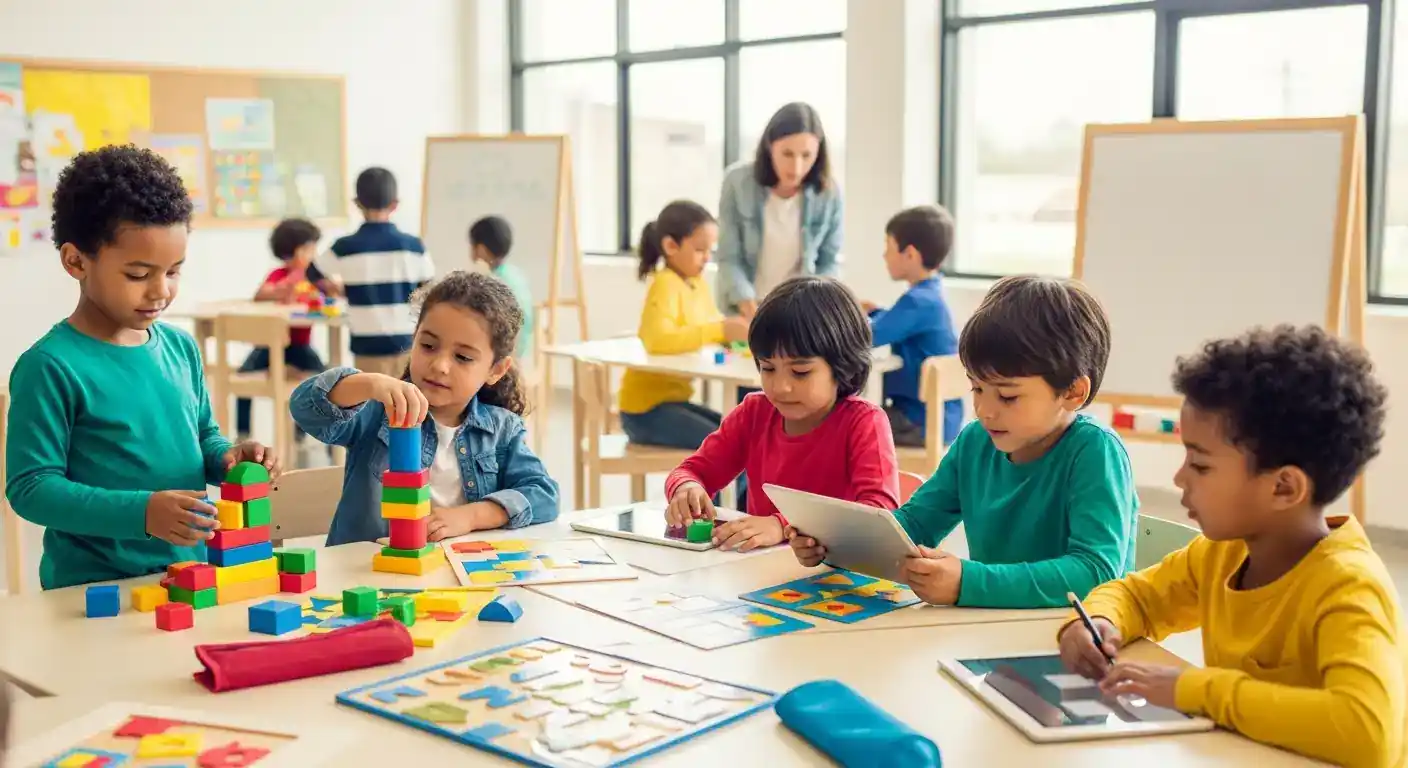
How Classic Early Childhood Education Theories Inform Modern Teaching Techniques
The landscape of early childhood education has evolved dramatically, yet the foundational wisdom of classic early childhood education theories remains remarkably relevant. These timeless frameworks offer profound insights into how young children learn, grow, and interact with the world. Far from being antiquated, these theories actively inform modern teaching techniques, shaping everything from curriculum design to classroom management and play-based learning strategies.
Understanding these historical perspectives empowers educators to create more effective, engaging, and developmentally appropriate learning environments today. This article delves into how the ingenuity of pioneers like Froebel, Montessori, Piaget, and Vygotsky continues to resonate, providing a robust theoretical backbone for contemporary educational practices.
Key Points:
- Enduring Relevance: Classic theories offer timeless principles for child development and learning.
- Foundation for Modern Pedagogy: They directly influence today's play-based learning strategies and teaching methods.
- Holistic Child Development: Emphasize cognitive, social, emotional, and physical growth.
- Empowering Educators: Provide a framework for designing responsive and effective learning environments.
- Validated by Science: Modern neuroscience often validates the intuitive wisdom of these early theorists.
Understanding the Enduring Legacy of Early Childhood Education Theories
The journey into early childhood education is incomplete without acknowledging its historical pillars. Decades, and even centuries, ago, visionary thinkers laid the groundwork for how we understand and approach child development and learning. These classic early childhood education theories aren't just historical footnotes; they are dynamic blueprints that continually guide and refine our educational practices.
Pioneers of Play and Pedagogy: Key Theorists
The contributions of several key figures form the bedrock of early childhood education. Their insights into how children learn have shaped generations of educators and continue to inspire modern teaching techniques.
- Friedrich Froebel (1782-1852): The Father of Kindergarten Froebel championed the idea of learning through play and self-activity. He believed that play is the highest expression of human development, introducing "gifts" (geometric blocks) and "occupations" (crafts) to foster creativity and understanding. His emphasis on structured play is a direct precursor to today's play-based learning environments.
- Maria Montessori (1870-1952): The Prepared Environment Montessori revolutionized education by advocating for child-centered learning within a "prepared environment." She observed that children thrive with self-directed activity and hands-on exploration using specially designed materials. Her method promotes independence, concentration, and practical life skills, influencing many current curricula.
- Jean Piaget (1896-1980): Stages of Cognitive Development Piaget's groundbreaking work detailed how children construct knowledge through interaction with their environment. His theory of cognitive development outlined distinct stages (sensory-motor, pre-operational, concrete operational, formal operational), emphasizing that children are active learners who build understanding from their experiences. This informs age-appropriate curriculum design.
- Lev Vygotsky (1896-1934): Sociocultural Theory and the ZPD Vygotsky proposed that social interaction is fundamental to cognitive development. He introduced concepts like the Zone of Proximal Development (ZPD), where children learn best with the guidance of a more knowledgeable other. His theory highlights the importance of scaffolding and collaborative learning, which are central to modern pedagogical approaches.
- Loris Malaguzzi (1920-1994): The Reggio Emilia Approach Though more recent, the Reggio Emilia approach builds on these classics by viewing the child as a capable protagonist with "a hundred languages." It emphasizes community, artistic expression, and the environment as the 'third teacher'. This approach encourages project-based learning and deep inquiry, often seen in progressive modern schools.
Bridging the Gap: How Classic Theories Inform Modern Teaching Techniques
The genius of these classic theories lies in their adaptability and timelessness. Educators today skillfully bridge the gap between these foundational ideas and contemporary needs, ensuring that children receive a robust and relevant education. This integration is particularly evident in the widespread adoption of play-based learning strategies.
The Power of Play in Modern Classrooms
Modern classrooms embrace play not as mere recreation, but as a critical vehicle for learning, a direct echo of Froebel's philosophy. From imaginative role-playing areas to building blocks, play-based learning fosters creativity, problem-solving, and social skills. Educators design rich environments where children can explore, experiment, and discover independently, mirroring Montessori's "prepared environment." This approach allows children to naturally engage with concepts, making learning more meaningful and lasting. To delve deeper into how these strategies are implemented, explore our /categories/play-based-learning-strategies category for valuable insights.
Fostering Cognitive and Social-Emotional Growth
Piaget's insights into cognitive development guide educators in creating age-appropriate activities that challenge children just enough to promote growth. Similarly, Vygotsky's focus on social interaction underscores the importance of group projects and peer learning, helping children develop crucial 21st-century skills like collaboration and communication. We know that social-emotional learning (SEL) is paramount for children's overall well-being and future success. By fostering environments that encourage children to express emotions, negotiate, and empathize, educators are directly applying Vygotskian principles, even when addressing modern challenges such as navigating digital citizenship.
Designing Responsive and Enriching Learning Environments
The concept of the learning environment itself has been profoundly shaped by classic theories. Montessori's "prepared environment" and Reggio Emilia's "environment as the third teacher" highlight the importance of thoughtful classroom design. Modern educators create spaces that are:
- Accessible: Materials are within reach, encouraging independence.
- Stimulating: Diverse resources invite exploration and curiosity.
- Flexible: Spaces adapt to various activities, from quiet work to dynamic group play.
- Culturally Responsive: Reflecting the diverse backgrounds of the children.
This intentional design empowers children to take ownership of their learning, fostering a sense of agency and belonging. The emphasis on observation, allowing children to lead their learning journey, remains a cornerstone of effective modern pedagogy.
Evidence-Based Applications and E-E-A-T Insights
The enduring relevance of classic early childhood education theories is not just anecdotal; it's backed by contemporary research. Modern neuroscience, for instance, provides compelling evidence that many of the intuitive practices advocated by these pioneers—such as learning through play and social interaction—are crucial for optimal brain development. This validation strengthens our commitment to these foundational principles.
A 2024 study published in the Journal of Early Childhood Research highlighted that children engaged in structured play-based curricula demonstrated significantly higher levels of executive function and social competence than those in more traditional academic settings. This directly supports Froebel's initial convictions about the value of play. Furthermore, research from Stanford University's Graduate School of Education, updated in 2025, emphasizes the critical role of teacher-child interactions, affirming Vygotsky's sociocultural theory and the power of scaffolding in early learning. As an educator who has witnessed countless examples, I can attest that carefully designed interactions and environments transform children's learning experiences, validating these theories in real-time. For further reading on this topic, consider /articles/understanding-the-benefits-of-play-based-learning.
Navigating the Evolution of Early Childhood Education Principles
While the core principles remain, early childhood education continues to evolve, necessitating a dynamic application of these theories. The digital age, for example, presents new challenges and opportunities. Educators must consider how screen time impacts development, and how classic theories might guide the integration of technology in a developmentally appropriate way. The evolution of early childhood education principles calls for educators to be lifelong learners themselves, adapting strategies while holding fast to what we know about how children learn best.
Neuroscience continually validates the holistic approaches championed by early theorists. For example, the importance of movement, sensory exploration, and secure attachments for cognitive development aligns perfectly with Montessori's emphasis on practical life skills and Reggio Emilia's focus on the child's innate capabilities. These findings encourage us to remain student-centered, emphasizing active learning and respecting each child's individual pace. For more on creating effective learning spaces, see /articles/designing-engaging-learning-environments-for-preschoolers.
FAQ Section
Q1: Why are classic early childhood education theories still relevant today?
Classic theories remain relevant because they offer fundamental insights into child development that transcend time and technology. They address universal aspects of how children learn, interact, and grow—mentally, socially, and emotionally. These foundational understandings provide a consistent framework that helps educators navigate new challenges and integrate modern research findings effectively.
Q2: How do classic theories specifically support play-based learning?
Classic theories are the bedrock of play-based learning. Froebel explicitly championed play as the highest form of learning, while Montessori's "prepared environment" encourages self-directed exploration akin to play. Piaget's work shows how children construct knowledge through active engagement, often via play, and Vygotsky highlights how social play fosters cognitive and social skills through interaction and scaffolding.
Q3: Can these classic theories be applied to diverse learners and cultural contexts?
Absolutely. While originating from specific contexts, the core tenets of these theories are highly adaptable. Principles like individualized learning (Montessori), scaffolding (Vygotsky), and respect for the child's capabilities (Reggio Emilia) can be tailored to meet the unique needs and cultural backgrounds of diverse learners, promoting inclusive and equitable educational practices worldwide.
Q4: What's the biggest misconception about classic early childhood education theories?
A common misconception is that these theories are outdated or too rigid. In reality, they offer flexible frameworks rather than prescriptive methods. They are living documents, continuously interpreted and applied in novel ways by modern teaching techniques. The strength of these classic early childhood education theories lies in their adaptable principles, not in strict adherence to every historical detail.
Conclusion
The profound impact of classic early childhood education theories on our current pedagogical approaches is undeniable. From Froebel's insights into the power of play to Vygotsky's emphasis on social learning, these foundational ideas continue to shape the most effective modern teaching techniques. By understanding and applying these timeless principles, educators can create nurturing, stimulating, and highly effective learning environments that truly empower children to thrive.
We encourage you to explore these theories further and consider how they manifest in your own educational settings. Share your thoughts in the comments below, or subscribe to our newsletter for more insights into play-based learning and child development. Continue your learning journey with our extended reading suggestions: articles on /categories/play-based-learning-strategies to deepen your understanding of how historical wisdom informs our innovative present.